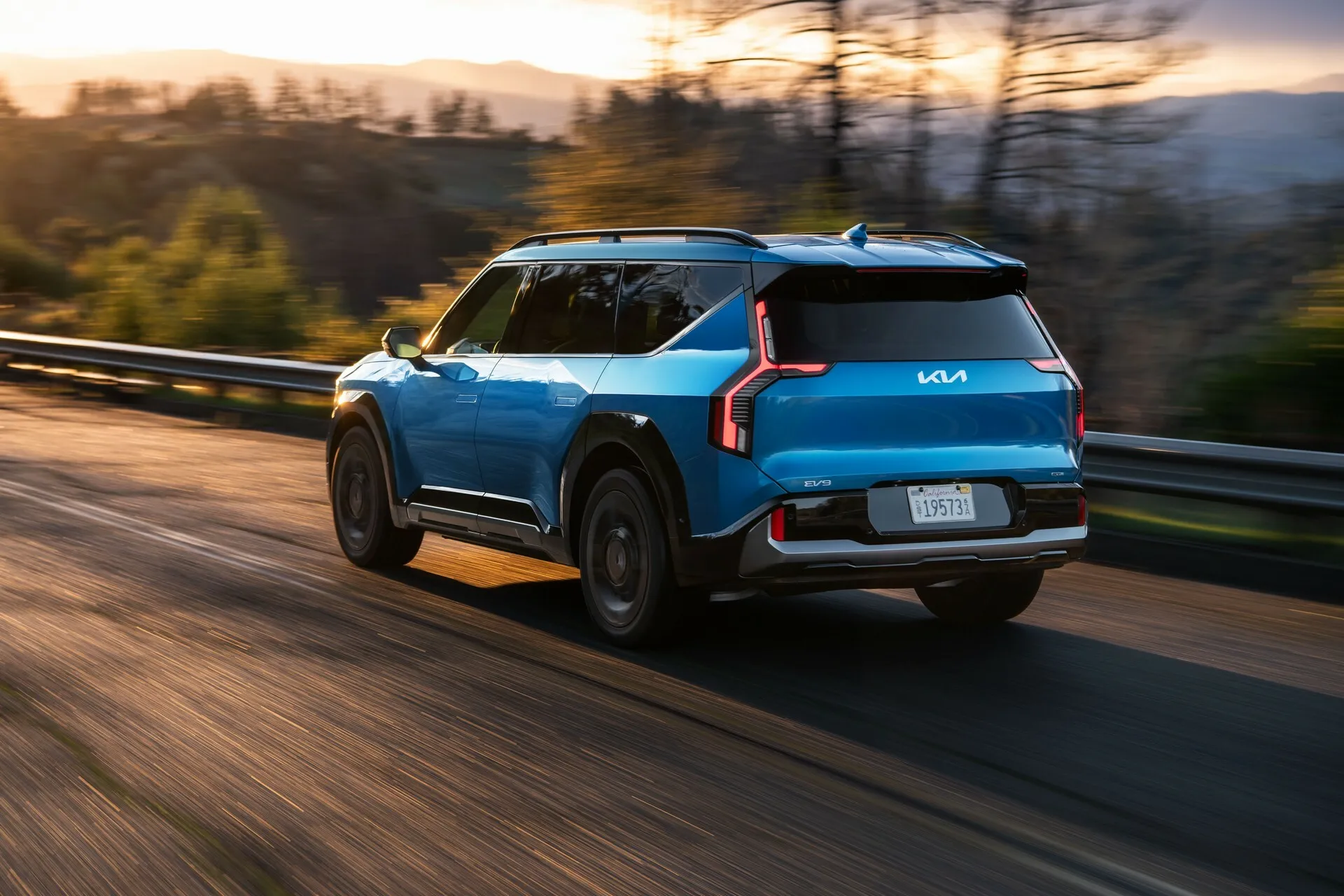
Kia is holding back from full-scale production of its electric EV9 SUV in the United States, as the company awaits local battery production to meet federal tax credit requirements. Currently, the EV9 qualifies for just half of the $7,500 federal EV tax credit because its battery packs are sourced overseas.
Table of Contents
Kia EV9 production in USA
Limited Tax Credit Due to Battery Origin
The Kia EV9, a fully electric three-row SUV, has only qualified for $3,750 of the available tax credit for buyers. This shortfall stems from its imported battery packs, which don’t comply with the current regulations for the full $7,500 credit. These rules require a significant portion of EV batteries to be sourced or assembled within the U.S. or in countries with free-trade agreements to qualify.
For customers who wish to benefit from the full tax credit, leasing the EV9 offers an alternative. Purchasing, however, remains limited to the partial credit until Kia transitions to locally sourced batteries.
Local Production and Battery Challenges
Although U.S. production of the EV9 began earlier this year at Kia’s West Point, Georgia plant, the automaker has yet to fully scale its output. The delay is due to waiting for batteries that will meet tax credit standards. Kia America’s chief operating officer, Steve Center, highlighted that the complexities of the tax credit system, particularly around battery sourcing, are influencing the company’s pace of production.
Kia’s parent company, Hyundai Motor Group, is actively addressing this issue. A $7.6 billion EV and battery plant is under construction in Bryan County, Georgia. This facility is set to begin producing the Hyundai Ioniq 5 as early as next month, but the battery production side won’t be operational for about a year. Kia has committed to transitioning the EV9 to locally manufactured batteries once they become available, but it remains unclear whether these batteries will come from the Bryan County site or other suppliers.
Impact of Political Uncertainty on EV Credits
Center also pointed out the potential impact of a future U.S. administration on the EV tax credits. If a new administration were to reverse or eliminate these credits, it could significantly reduce demand, particularly for middle-class buyers who rely on the financial incentives to make electric vehicles more affordable.
He noted, “What will impact consumer demand is when you have a very strong policy reversal… if the administration changed, and the $7,500 tax credits were eliminated, that would impact a lot of middle-class and below buyers.”
EV9 Sales and Future Outlook
Despite these challenges, the Kia EV9 has seen solid sales. As of the first eight months of the year, Kia sold 13,874 units in the U.S. The gradual scaling of production, once local batteries become available, should help the EV9 remain competitive in the market and take full advantage of the federal tax incentives.
Final Thought
Kia is strategically delaying the full-scale production of the EV9 in the U.S. until it can secure locally sourced batteries that qualify for the full $7,500 tax credit. With a new battery plant in the works and a political landscape that could influence EV demand, Kia’s next moves will be crucial in maintaining the momentum of the EV9’s success.